- Products
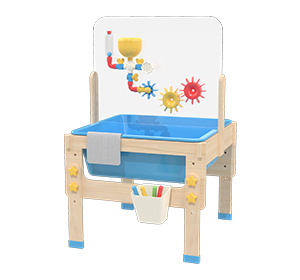
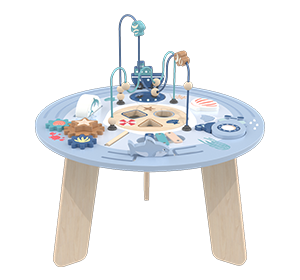
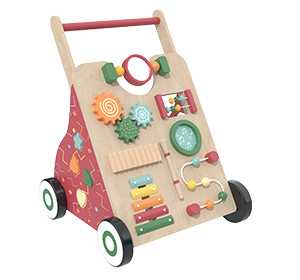
10 categories of custom wooden toys
Every category is tooled in-house — 500 pcs MOQ, EN71 / ASTM F963 tested.
- Customized Services
From your brief to a shipped carton
OEM, ODM and private label programs run on the same tooling, QC and packaging lines.
Service models Sampling in 7 days
In-house CNC and paint shop keep prototypes moving.
Start a sample → - Solution
Built around who you sell to
Programs shaped for brand owners, retailers and education buyers — not one-size-fits-all.
Programs World's top-10 toy brands
Chosen supplier since 2011.
Read the cases → - Ability
Design, manufacturing and quality in one system
90,000 m² in Yunhe, Zhejiang — design, machining, painting, assembly and inspection under one roof.
Capability 3.6 million units a year
18 production lines running two shifts.
See the line → - About Us
Wooden toys since 1993
A Yunhe-based maker that grew with the world’s toy brands — and still finishes every edge by hand.
Company Design studio in-house
12 designers and 6 engineers on staff.
Meet the team → - Support
Answers before you ask
Blogs, FAQ and the purchasing guide — everything a sourcing team asks us before the first order.
Read Purchasing guide 2026
68 pages on costing and compliance.
Read the guide →

What safety standards do Kidmerry wooden toys meet?
EN 71-3 limits how much of certain elements can migrate out of toy materials a child might put in their mouth. It covers heavy-metal migration only, not sharp edges, small parts or flammability. We test each product and each paint colour at a third-party laboratory, and issue a report per SKU, per order.
Certifications at a Glance
The table below lists the six certification and compliance documents we reference in quotations, what each one actually is, and how a buyer can verify it. Product test reports are issued per product and per order unless stated otherwise.
| Certification | What it is | How we apply it | How to verify |
|---|---|---|---|
| EN 71-3 | Part 3 of the EU toy safety standard: migration of certain elements (heavy metals). A test report, not a certificate. | Every product and every paint colour is sampled separately and tested at an accredited third-party laboratory; the report is issued per product and per order. | Request the report PDF for your model and check the model number, the laboratory and the report date. |
| CPSC / ASTM F963 | CPSC is the US Consumer Product Safety Commission — a regulator, not a certificate. ASTM F963 is the US toy safety standard. | US-bound orders are tested to ASTM F963-23 at third-party laboratories, with the documents assembled for US import requirements. | Request the report PDF for your model; issued per product and per order. |
| ISO 9001:2015 | Factory quality management system certification, covering design and production of wooden toys. | Applied across the full process from order intake to shipment. | Certificate 00125Q33110R6M/3600, issued by CQC, valid to May 2028; verifiable at www.cqc.com.cn. |
| BSCI | amfori BSCI social-compliance audit. | The factory receives regular audits; the 2026 renewal audit is in progress. | Ask our sales team for the audit summary. |
| Sedex (SMETA) | Ethical trade audit platform and SMETA audit method. | The factory is registered on the Sedex platform and receives SMETA audits. | Buyers verify directly on the Sedex platform using the factory registration details we provide. |
| FSC CoC | Chain-of-custody certificate tracing certified board from purchase to shipment. A system certificate, not a product certificate. | Certified board is received against CoC purchase documents, stored separately and batch-recorded; the FSC claim can be printed on invoices and packing lists. | Certificate TUVDC-COC-888157, issued by DIN CERTCO, valid to 2 August 2027; verify at info.fsc.org — and confirm your SKU is in scope. |
Kidmerry supports testing to the applicable toy safety standards for your market, including EN 71-3 (migration of certain elements) for the EU and ASTM F963-23 for the U.S. Depending on the product and destination market, testing may cover physical and mechanical properties, flammability, chemical substances, migration of heavy metals, small parts, sharp edges, and other applicable safety requirements. In addition to our factory quality system certified to ISO 9001:2015, we coordinate third-party testing through internationally accredited laboratories — for example, Eurofins, which has issued test reports for our wooden toy products — and can also arrange testing with SGS, TUV, Intertek, or Bureau Veritas (BV), or a laboratory you nominate. You may also specify test requirements for your target market and sales channel. Your order documents can include the relevant certificates, test reports, and compliance paperwork, and for OEM/ODM projects we coordinate additional testing and documentation to help you prepare for international distribution.
What EN 71-3 measures, and what it does not
"EN 71" is a multi-part standard, and the parts answer completely different questions. Buyers who ask for "EN 71 certification" usually mean one part without knowing which:
| Part | Question it answers | Sits with |
|---|---|---|
| EN 71-1 | Mechanical and physical properties — sharp edges, small parts, tip-over, entrapment | Per project, third-party lab |
| EN 71-2 | Flammability of materials — how fast a fabric or film burns | Per project, third-party lab |
| EN 71-3 | Migration of certain elements — how much heavy metal leaches from a material | Held as a standing capability; report per SKU |
| EN 71-9 / -14 | Organic chemical compounds, and finger paints | Per material, when applicable |
Our standing certification covers EN 71-3. Where a market or a retail programme requires EN 71-1 or EN 71-2, testing is arranged for that project and the report is issued for that product — we do not present those as factory-level certificates, because they are not.
The three material categories, and why they matter to your cost
EN 71-3 does not apply one limit to everything. It sorts toy materials into three categories and sets a different limit for each element in each category:
| Category | Materials that fall into it | Lead limit (mg/kg) |
|---|---|---|
| I | Dry, brittle, powder-like or pliable — bare wood, sawdust, chalk, pliable plastic | 13.5 |
| II | Liquid or sticky — paints, lacquers, inks, adhesives still wet at the point of test | 3.4 |
| III | Scraped-off material — the coating film a child can scrape off with a fingernail | 160 |
The category logic explains a pattern that surprises first-time buyers: a toy can pass on the wood and fail on the paint, or pass the wet paint and fail the scraped film. Category III is where most failures happen in wooden toys, because the limit is twenty times looser than Category II but the test is run on a film that may be thin, porous, or applied in too few coats.
Figures above are illustrative of the limits in EN 71-3:2019+A1:2021; the test report is the authoritative record for any specific product.
The test matrix is driven by paint colours, not by SKU count
This is the single most common planning error we see. A buyer assumes ten SKUs means ten tests. In practice the matrix is built from colours and materials:
- Each distinct colour of paint or ink is a separate test portion. A toy with red, blue and yellow detail is three portions, not one.
- Each wood finish — clear lacquer, water-based stain, wax — is a separate portion.
- Each printed paper or sticker element on the toy is a separate portion.
A five-colour puzzle can therefore generate more test portions than a twenty-SKU range that shares one palette. If your launch budget is sensitive, the cheapest lever is palette discipline: fewer colours across more SKUs. This is a design decision, not a testing one, which is why it belongs in the brief and not in the purchase order.
What documents your importer actually receives
A frequent source of friction at the port is the assumption that a supplier can hand over "the compliance certificate" and the job is done. The document set is more specific than that:
| Document | What it is | Who issues it |
|---|---|---|
| EN 71-3 test report | Element-by-element results against the limits, per material portion | Accredited third-party laboratory |
| Technical file inputs | Drawings, material declarations, finish specifications, age grading | We supply |
| Declaration of conformity | The formal statement that the product meets the applicable directive | The EU importer or authorised representative signs it |
| Audit reports | BSCI and Sedex SMETA social compliance | We supply on request |
| Quality certificates | ISO 9001:2015 quality management | Certification body |
We do not sign a declaration of conformity on a customer's behalf — the economic operator placing the toy on the EU market is the party that signs it, and our role is to supply the test reports and technical file that the declaration rests on. Buyers who expect the factory to "provide the certificate" are usually looking for a document only their own company can issue. For how the documents fit together, see our guide to EN 71 compliance documents.
Five things that trigger a retest
Test reports are tied to a configuration, not to a product name. Any of the following invalidates the previous report and, if your buyer audits, will be treated as a gap:
| # | Trigger | Why it matters |
|---|---|---|
| 1 | Paint, ink or lacquer supplier change | Even a like-for-like substitution has a different formulation batch; the tested portion no longer exists |
| 2 | New wood species or board supplier | Different species absorb and retain finish differently, changing the leachable fraction |
| 3 | New component with a mouth-contact surface | A new knob or bead needs its own portion |
| 4 | Design change to a painted area | More or fewer coats changes film thickness, which moves the Category III result |
| 5 | Standard revision | A new amendment changes limits or methods; last year's report is not evidence against this year's standard |
Where a new mouth-contact component involves magnets rather than coatings, additional market-specific rules come into play — we keep a short note on magnet safety rules in the EU and US for that case.
Where the risk actually sits in a wooden toy
Bare, unfinished wood is usually the lowest-risk material on the bench — it is a Category I material with a comparatively generous limit, and untreated beech or maple rarely produces a surprise. The risk concentrates in four places:
- Paint and lacquer films, especially bright pigments where cadmium or lead compounds historically appeared
- Printed paper, stickers and transfer films applied to the toy surface
- Edge-sealing wax and putty used to close end grain
- Water-based stains and dyes, which are low in heavy metals but still require a portion
For a new programme we therefore plan the test matrix around the finish schedule first and the wood second. That ordering also shortens the sampling loop: if a colour fails, only that colour's portion needs a replacement trial, not the whole SKU. And if your programme also carries a sustainability claim, the finish decisions interact with fibre sourcing — see our page on FSC-certified board for wooden toys.
How the process is controlled in production
Certified material on the bench is worth little if the finish changes halfway through a run. Three controls keep the tested configuration and the shipped configuration the same:
- In-house painting and lacquering, so the film is applied under our own process parameters rather than a subcontractor's
- Batch retention — a sample of each painted batch is kept, so a dispute six months later can be resolved against the actual production film
- Colour-and-finish records per SKU, so a replacement order reproduces the tested configuration rather than a close approximation
CNC machining runs at ±0.1–0.2 mm, and edges are rounded as part of the cut rather than by hand afterwards — a rounded edge takes a more even film, and an even film is what makes a Category III result repeatable across batches. You can see these controls applied on a typical multi-coat programme, such as our custom wooden busy board range.
Timeline and what to send us
Reports are issued per product and per order. Sampling runs 7–10 working days for an existing design and 15–20 working days for a new one built to your drawing; testing is scheduled alongside sampling so that the report is available before bulk confirmation rather than after. Bulk production follows in 30–45 days from sample approval, or 45–60 days during the Q2–Q3 peak.
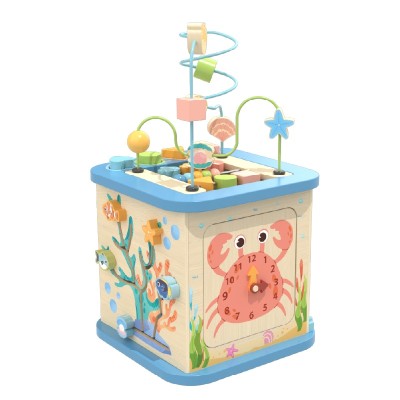
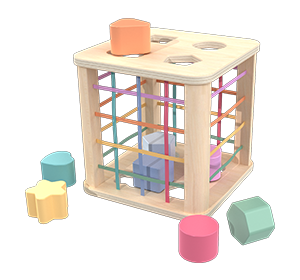
To quote a programme accurately, send the age grading, the target market, the colour count per SKU and any existing report you are trying to supersede. Age grading in particular changes both the applicable limits and the test portions, and it is the item most often missing from a first enquiry. A compact single-colour example of the discipline described above is our wooden shape sorter cube.
Frequently asked questions
Is EN 71-3 the same as EN 71?
No. EN 71 is a multi-part standard. EN 71-3 covers migration of certain elements — heavy metals leaching from toy materials. EN 71-1 covers mechanical and physical hazards, and EN 71-2 covers flammability. A report for one part is not evidence for the others.
How long is an EN 71-3 report valid?
The standard sets no expiry date. A report stays representative as long as the design, materials, finishes and applicable standard version are unchanged. Retail programmes nevertheless often require a report issued within the last 12 months, which is a buyer policy rather than a legal rule.
Can the report be issued in our company name?
Yes, on request. Reports can be issued to the buyer as applicant, which is convenient when your retail customer wants to see the document in your name rather than the factory's.
Does one report cover all of your products?
No, and any supplier who says otherwise is worth a second look. Reports are issued per product and per order, because the test portions are defined by that product's colours, materials and finishes. Two wooden toys that look similar on a catalogue page can have completely different test matrices.
Do you also test the packaging?
Packaging is not a toy, so EN 71-3 does not apply to the carton itself. Packaging falls under separate requirements depending on the market, and toy materials that a child can reach inside the pack remain in scope. We can advise per market when packaging design starts.
What about the US market?
The US scheme is different: CPSC requirements and ASTM F963 rather than the EN 71 parts. We hold CPSC / ASTM F963 among our certifications, and the document set for a US launch is assembled separately from the EU one. Tell us the destination market at enquiry stage and we will quote the right matrix.