Global Wooden Toy Manufacturing and Solutions Expert

Design & Development for Custom Wooden Toys

Home / Design & Development for Custom Wooden Toys

Design Philosophy

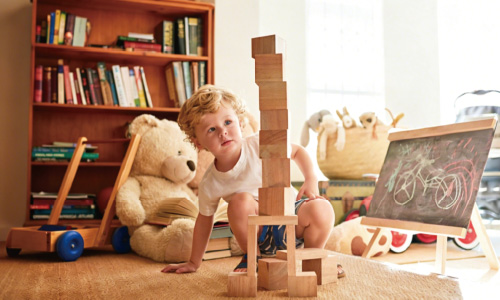
Kidmerry prioritizes children's growth, adhering to safety and sustainable development as its design foundation. We deeply integrate child development principles with Montessori and STEAM education concepts to create wooden toys tailored to children at different developmental stages, stimulating their interest in play while generating greater commercial value for our partners.
1

Focusing on Children's Growth

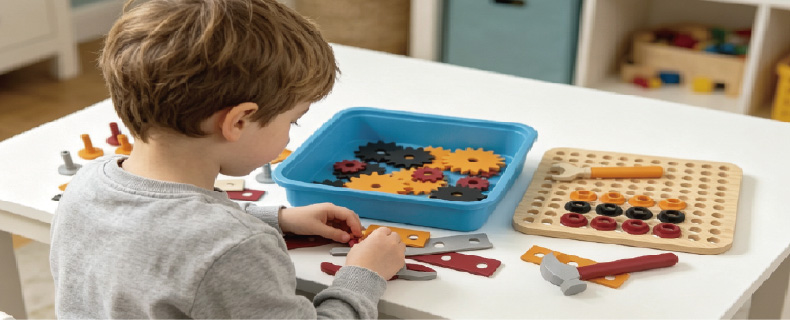
Kidmerry designs its toys around the developmental abilities of children at different stages of development, ensuring toys meet their current operational needs while appropriately stimulating their exploration and learning potential, allowing children to grow naturally through play.

2

Safety First Principle

All products strictly adhere to international toy safety standards, with comprehensive control over everything from structural design to detail processing, ensuring the safety and reliability of children during use.

3

Sustainable Material System

We prioritize the use of FSC-certified sustainable wood and environmentally friendly water-based coating processes, ensuring product quality and durability while reducing environmental burden and promoting green manufacturing.

4

Real User-Oriented Design

Based on continuous market research and user insights, we incorporate real-world family usage scenarios into the design process, making products more relevant to daily needs and combining practicality with fun.

5

Continuous Innovation and Process Upgrades

We constantly explore new materials, structures, and processes, continuously improving product experience and quality through collaborative optimization of design and manufacturing.

6

Customer Value and Business Empowerment

We provide end-to-end support from concept design to mass production delivery, helping customers maximize product competitiveness and business value through solutions that improve development efficiency and optimize costs.

Design Philosophy

Based on the developmental and learning characteristics of children at different stages of growth, Kidmerry divides its product system into five major developmental series, covering all stages from sensory enlightenment to advanced creativity.

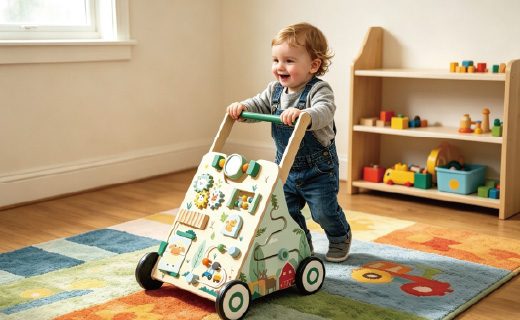
0–12 months

Early sensory and motor exploration toys

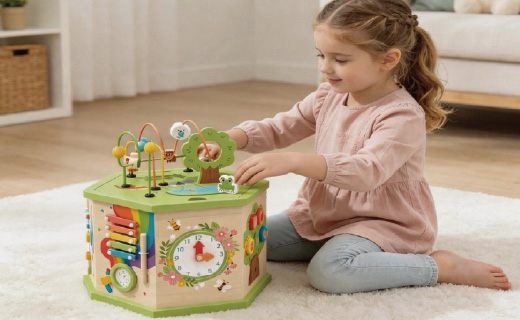
1–3 years

Basic ability building toys

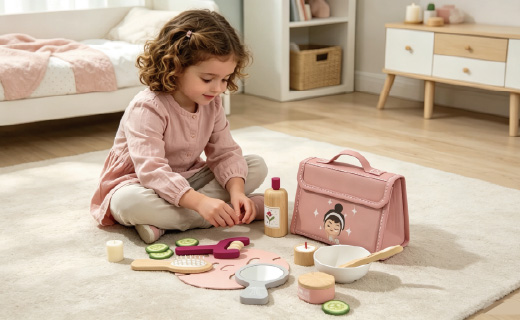
3–6 years

Open-ended logic and socialization role-playing system

6–12 years

Logic and exploration development system

Teenage/Adults

Advanced creativity and self-development system

Design Options

Research and Evaluation Phase

  • Trend Insight
  • Educational Philosophy
  • Risk Control

Analyze trends and educational needs to accurately select products and mitigate development risks.

Design and Prototyping Phase

  • Concept Development
  • Structural Engineering
  • Destructive Testing

3D modeling overcomes wood tolerances; destructive testing ensures safety.

Finished Product Sample and Feedback Phase

  • Detailed Adjustments
  • Manufacturing Feasibility
  • Standard Filing

Adjust the feel and process based on feedback, confirm pre-production samples, and freeze standards.

Formal Production Phase

  • Process Conversion
  • Double Quality Inspection
  • Stable Delivery

Standardized and meticulous sanding and deburring; double quality inspection ensures mass production quality.

Marketing Phase

  • Visual Assets
  • Selling Point Extraction
  • Channel Adaptation

Output high-quality renderings and scene materials to enable rapid listing across all channels.

lteration Phase

  • Experience Optimization
  • Module Extension
  • Cycle Extension

Collect feedback to continuously optimize the structure, and extend the life cycle through serialized development.

Kidmerry Service Process

Market Research

Gain insights into global wooden toy trends and generate product positioning data.

Concept Screening

Integrate early childhood education concepts to select high-quality commercially viable ideas.

Detailed Design

Implement a complete solution encompassing appearance, structure, materials, and intellectual property.

Prototype & Testing

Create physical prototypes to verify product functionality and complete safety and compliance testing.

Golden Sample

Produce standard sealed samples to establish the basis for mass production.

Feedback & Refinement

Collect customer feedback and iteratively adjust and improve the product design.

Production Prep

Finalize the bill of materials and production processes, and complete technical briefings at the factory.

Marketing Support

ldentify the core selling points of the product and provide supporting brand marketing materials.

Product Evolution

Continuously optimize and upgrade products based on market sales feedback.

Design Team

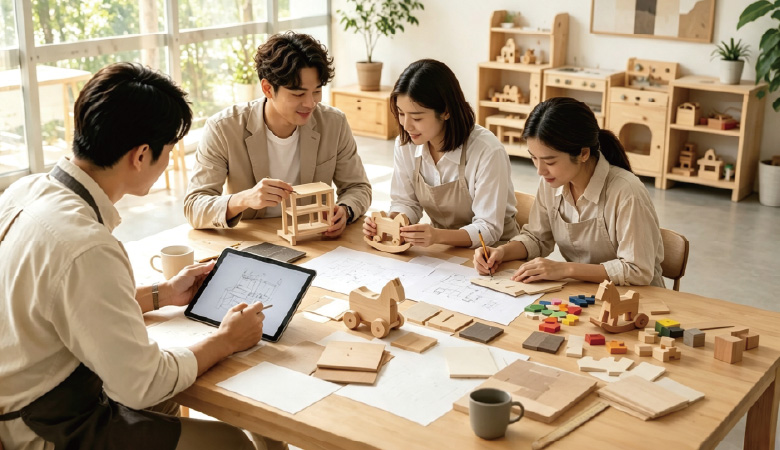
Based in Hangzhou and closely integrated with the market, our design team collaborates deeply with the factory's R&D system, forming a closed-loop development system encompassing "trend insight—engineering implementation—manufacturing execution." We boast an annual new product development capacity of over 300 models, providing efficient and stable product innovation support to global clients.

Product Designer

Creativity and Market Driven

Responsible for market research and new product concept development, covering diverse categories including infant and toddler wooden toys, building blocks, role-playing toys, and IP collaborations. Based in Hangzhou, the team can quickly capture children's toy design trends and aesthetic directions, transforming insights into feasible product solutions, completing appearance design and highlighting selling points, and accurately matching brand positioning with market demands.

Structural Engineer

Mass Production and Safety Implementation

Focusing on wooden toy structure development, familiar with mortise and tenon joints, gears, magnets, and hinges—structural systems unique to wooden toys—ensuring design feasibility and long-term stability. Completes 3D modeling, CAD engineering drawings, and BOM output, and conducts safety assessments in advance during the design phase (anti-pinch, anti-small parts, rounded corner optimization), achieving efficient transformation from concept to mass production and reducing production risks from the source.

Graphic Designer

Brand Visual Communication

Responsible for the design of product print graphics, packaging, instruction manuals, and e-commerce materials. Collaborate with the product design team from the early stages of product development to ensure that the brand visuals and product structure remain consistent throughout the development phase, improving overall unity and end-user presentation from the source.

Prototyping Policy

Prototyping Process

  • Step 1

    Requirements Communication and Design Confirmation

    Upon receiving your project requirements, we will discuss the product concept, size requirements, target market price, and timeline in detail. Please provide design sketches, reference images, or functional descriptions. Our designers will assess the feasibility of the process and output a preliminary design.

  • Step 2

    Structural Design and Engineering Drawings

    Our structural engineers will complete the 3D modeling and structural engineering drawings of the wooden toy based on your design documents and production requirements. We will optimize the mortise and tenon joints, magnetic connections, gears, and other connection structures to address the challenges of wood deformation and tolerances. Providing source design files (such as 3D models or three-view drawings) will greatly improve accuracy and efficiency.

  • Step 3

    Material Selection and Process Confirmation

    Based on the design scheme, we will select FSC-certified wood (beech, linden, birch, pine, etc.) and confirm the environmentally friendly water-based paint or wood wax oil surface treatment process. We strictly adhere to EN71, ASTM, and CPSIA safety standards to ensure material compliance from the source.

  • Step 4

    Prototype Making and Safety Testing

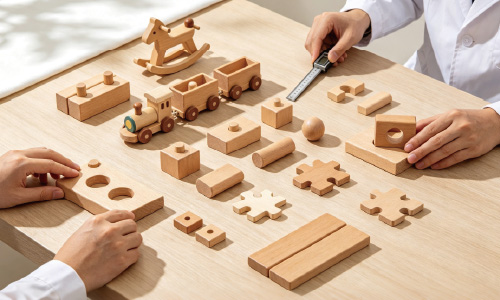
    Using CNC or 3D printing technology, we quickly create physical prototypes to verify feel, dimensions, and functionality. Simultaneously, we complete safety compliance tests on small parts, tensile strength, torque, and corner fillets to ensure the product meets target market access requirements.

  • Step 5

    Golden Sample Production and Sealing

    Based on feedback from multiple rounds of testing, we optimize the solution and produce a Golden Sample (pre-production standard sealed sample). We freeze all design schemes, BOM (Bill of Materials), and acceptance criteria as the basis for subsequent mass production.

  • Step 6

    Customer Confirmation and Feedback Loop

    We send the finished sample to the customer for review, collecting evaluation feedback for multiple rounds of detailed revisions and optimizations. We comprehensively optimize aspects such as feel, dimensions, and assembly precision to ensure the final solution perfectly matches the brand's expectations. Once confirmed, mass production scheduling begins, ensuring efficient project progress.

Prototype cycle

The prototyping cycle begins from the date of confirmation of 3D drawings or clarification of development requirements. The actual cycle may be adjusted due to structural complexity and process requirements.

Style TypeSample Lead TimeProcess and Complexity Description
Simple Styles7-10daysBasic structure, no complex functions or special processes (e.g., no printing/no mechanical structures)
Standard Styles10-15daysIncludes basic printing, simple structural optimization, or functional assembly
Complex Custom Styles20-30daysInvolves multiple structural combinations (gears/magnetic/sliding rails, etc.), special processes, or functional development;requires engineering evaluation and confirmation period.

Fees & MOQ

MOQ:
Minimum of 1 piece for sampling.
Basic Sample Fee:
USD 100–1200 per sample (price calculated separately based on structural complexity, whether it's handmade/CNC/type of sample).
Additional Notes:
Unlimited free sample modifications within 3 months.
Process Surcharge:
USD 50 per sample for processes such as heat transfer printing and 3D prototyping; complex functional modules will be assessed separately.
Shipping Costs:
Based on international courier service quotes.

Sample Fee Refund Policy

Full Deduction/Refund: If you confirm the sample is satisfactory, and subsequent orders reach 5000 pieces or more, the initial basic sample fee can be fully deducted from the bulk order payment or refunded.

Design and Development Case Study

"In Kidmerry's wooden toy showroom, various scenario-based toys are displayed in a well-organized manner. Behind each one lies a product development story of close collaboration with the client, transforming real needs into practical solutions.

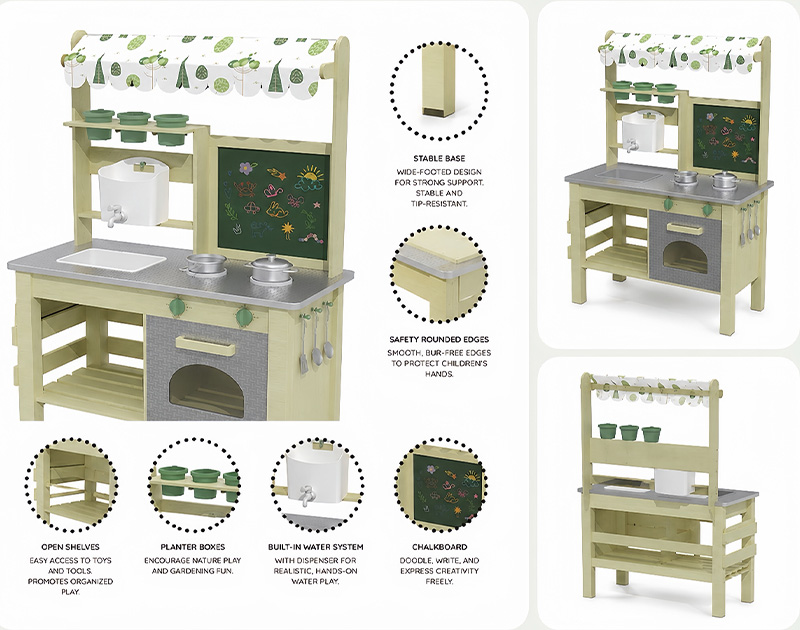
Our client is a European and American children's brand. They found that most kitchen toys on the market focused on indoor 'playing house' scenarios, while children truly needed outdoor exploration experiences interacting with mud, sand, and water in nature. Thus, the 'Mud Kitchen' concept was born.

To realize this concept, we delved into real-world scenarios, systematically breaking down children's five core behavioral paths: acquisition, processing, cooking, cleaning, and storage. Considering the body shape and operating habits of children aged 3 and above, we precisely optimized the work surface height, sink depth, and storage layout. For safety, we adopted a low-center-of-gravity, widened base, multi-point support, and non-slip feet to adapt to uneven outdoor ground, ensuring stability and preventing tipping; all corners were rounded, and the cabinet doors were equipped with soft-close damping hinges to eliminate the risk of pinching fingers." Structurally, the modular design functionally divides the planting area, sink area, worktop, and storage area, while mortise and tenon joints and hardware connections enhance stability. FSC-certified cedar and hemlock wood are used, easily withstanding outdoor sun and rain; the coating uses environmentally friendly water-based paint, meeting EN71 and CPC standards. Functionally, it integrates planting, kitchen, and storage. Features include a double stovetop, a visible oven, a circulating water system, a blackboard for drawing, layered storage with folding baskets, and helps children develop tidying habits.

After its launch, the product quickly gained recognition in the European and American markets, entering countless overseas family gardens. However, we didn't stop at the finished product. Based on actual user feedback, subsequent versions optimized the storage grille design, addressed dead angles at the sink and worktop connection, improved the flowerpot retaining structure, and added a push-button circulating water system, further solving real pain points related to outdoor water play, maintenance, and storage. After the upgraded version was launched, customers gave it high praise: "It's no longer just a toy, but a bridge between children and nature." Today, these children's kitchen products have found their way into the backyards and gardens of countless families in Europe and America. We always prioritize safety, practicality, and child development, helping children build confidence and learn about the world through mixing and cooking. At Kidmerry, we firmly believe that high-quality children's wooden toys are more than just play tools; they are systematic solutions integrated into the growth process.

Ready to Partner with Kidmerry?

Get a transparent quote for your custom wooden toy project. Our experienced project managers will guide you from concept to delivery.