









When Should Retailers Reorder Seasonal Stacking Sets?
A first order gets a project plan, a sample round and a launch budget. A reorder often gets a purchase order and a shipping date — and the weeks between those two documents are where peak seasons are quietly lost. This guide is written for importers, brand owners and wholesale buyers who sell wooden stacking sets against a fixed retail peak and need the second shipment to land on time, in the same colors and with the same fit as the first.
Peak seasons are lost between the purchase order and the shipping date, so work from a reorder point, not a feeling: expected demand during the full lead time plus a safety buffer — in the worked example here, about 1,000 units of lead-time demand plus a 400-unit buffer puts the trigger at 1,400. For a Q4 peak, confirm the purchase order by late spring or early summer: re-sampling an existing style takes 7–10 working days, bulk production runs 30–45 days and stretches to 45–60 in the Q2–Q3 capacity peak, and the 6 February 2027 Chinese New Year cutoff closes the year early. Reorder against the signed golden sample — it decides color twice — and lock quantities, component sheets and packaging artwork when the PO is signed.
What This Guide Covers
- Why reorders fail before the peak starts
- The reorder signal: when sell-through says "now"
- What changes between orders — and what must not
- The production calendar, layer by layer
- Factory peak season and Chinese New Year
- Batch consistency on a reorder
- A worked reorder calendar
- Five questions before committing a date
- How KIDMERRY supports repeat orders

1. Why Reorders Fail Before the Peak Season Starts
Most sourcing teams treat the first order as a project and the reorder as paperwork. That is understandable — the tooling exists, the artwork exists, the relationship exists — but it gets the calendar backwards. A first order usually has slack: it is placed right after a trade show or a catalogue review, months before any selling deadline. A reorder is placed because stock is running down, which means every week of the supply chain is now pointed at a fixed shelf date.
Stacking sets make this worse in a specific way. They are staple products with seasonal spikes: a balance stacking set or an alphabet block set sells steadily all year, then concentrates a large share of its annual volume into the gifting weeks of October to December. The seasonal colorways and gift packaging that make those weeks profitable are exactly the versions that cannot be improvised late, because a new colorway means a new paint batch and a new packaging print run on top of the standard production time.
The deeper problem is that the buyer's peak season and the factory's peak season are not the same months. A Q4 retail peak is produced during the northern-hemisphere summer — which sits inside the factory's own Q2–Q3 capacity peak, when production queues are longest. Your busiest selling season is, from the factory floor, a busy production season that ended six months before your shelves fill. Teams that discover this in July are not choosing between suppliers; they are choosing between a late delivery and a rushed one.
2. The Reorder Signal: When Sell-Through Says "Now"
A reorder date should not be a feeling. The working method is a reorder point: the inventory level at which a new purchase order must be confirmed, calculated as the demand expected during the full replenishment lead time plus a safety buffer.
For illustration purposes only: suppose a stacking set sells 400 units a month, the full lead time from purchase order to stock on hand is roughly ten weeks of production, transit and receiving, and you want four additional weeks of cover as safety stock. Expected demand during lead time is about 1,000 units; the buffer is about 400. The reorder point is therefore around 1,400 units — when your inventory and open orders fall to that level, the next order is already late. These numbers are an example of the arithmetic, not a forecast; your own figure moves with your sell-through, your destination and the season.
Two practical habits make the signal reliable. First, review weeks of cover monthly rather than reacting to empty shelves, because the lead time you must cover lengthens exactly when everyone else is reordering too. Second, separate the staple reorder from the seasonal reorder: a year-round colorway can be triggered late by the arithmetic above, but a seasonal colorway or seasonal gift box has a calendar deadline regardless of current stock, and it should be planned backwards from the shelf date instead.
3. What Changes Between Orders — and What Must Not
A reorder is not a smaller copy of a first order. Some costs genuinely disappear; some risks quietly appear. The table below compares the two at the level a purchasing manager actually decides on.
| Dimension | First order | Reorder |
|---|---|---|
| Tooling and fixtures | New fixtures, CNC programs and jigs for the style | Reused — which is also why fit should carry over |
| Sampling | New design built from drawings, typically longer | Re-sample of an existing style against the golden sample |
| Color reference | Palette built and approved from references | Matched back to the approved golden sample |
| Packaging | New dieline, new artwork, new print plates | Existing dieline and artwork; optional seasonal sleeve adds print lead time |
| Compliance documents | Full documentation for the ordered specification | Re-confirm which documents carry over when colorways or components change |
| MOQ logic | Per style, set with the first quotation | Per style as well — a repeat status does not automatically lower the per-style minimum unless agreed |
The row that trips teams is packaging. The dieline and print data all exist, but a seasonal sleeve, a gift band or a multilingual insert is a new print job with its own plate-making and drying time at the print supplier — and packaging suppliers often close for Chinese New Year earlier than toy factories do. If the peak version of your stacking set wears seasonal packaging, that print job belongs on the critical path, not on the to-do list for December.
4. The Production Calendar, Layer by Layer
A reorder lead time is not one number; it is a stack of durations, each with its own failure mode. Using KIDMERRY's current published planning figures as the reference — other manufacturers' calendars differ, and every project is confirmed individually — the stack looks like this:
- Reorder review and purchase order. Sell-through check, quantity decision, written confirmation of the frozen specification. One to two weeks, and the step most often skipped.
- Sample re-confirmation. An existing style is re-sampled in 7–10 working days, compared against the golden sample and signed off. Skipping this step is how a reorder drifts from the first shipment.
- Materials and paint batch preparation. Wood preparation, paint batching per colorway and packaging printing run in parallel; the packaging print supplier is usually the long pole when seasonal artwork is involved.
- Bulk production. 30–45 days after sample approval as the current published figure, extending to 45–60 days during the Q2–Q3 capacity peak. The clock starts at sample approval, not at purchase order.
- Final inspection and loading. Finished-goods inspection, carton counts and container loading, then FOB handover at the port.
- Ocean transit, customs and receiving. Port-to-port time plus customs and inland haulage, varying widely by destination and season — this layer is where pre-holiday congestion bites hardest.
Two of these layers deserve a standing rule. Bulk production time is counted from sample approval, so a late sample approval moves every later date one-for-one. And the FOB handover ends the factory's responsibility and starts the freight calendar, so the booking conversation belongs in week one of production, not in the week the containers are ready.
5. The Two Walls: Factory Peak Season and Chinese New Year
The reorder calendar has two fixed obstacles, and both sit in the second half of the year.
The factory's Q2–Q3 capacity peak. Most Q4 retail stock for European and North American buyers is manufactured between spring and early autumn, which is why production queues are longest then. KIDMERRY's published bulk lead time extends from 30–45 days to 45–60 days in this window — not because anything slows down, but because the same production slots are being allocated across more orders. The practical consequence: a reorder confirmed in May competes for capacity with every other buyer's Christmas program, while the same reorder confirmed in January sits in a quieter queue.
Chinese New Year. Chinese New Year 2027 falls on Saturday, 6 February. The official public holiday arrangement for 2027 had not been published as of early November 2026, and every factory sets its own closure and last-order dates — so the dates that matter are the ones your supplier confirms in writing, not the ones on a calendar. Three effects are consistent from year to year: orders confirmed late compete for a shrinking production window; material and packaging suppliers often stop accepting work earlier than the toy factory itself; and the restart after the holiday is gradual, with full capacity typically returning over the following weeks as workers come back. A reorder that cannot finish production and loading before the holiday will wait for the restart, plus the queue that forms behind it.
The working rules that follow from these two walls are simple. Place Q1-shipment reorders by October or November and treat December and January as a planning window for spring programs rather than a production window. Ask for the factory's last production start date and last FOB loading date before the holiday, in writing, every year. And if a reorder would be produced in the December-to-February stretch, decide deliberately whether to accelerate it ahead of the holiday or schedule it after the restart — those are the only two realistic options.

6. Color, Components and Batch Consistency on a Reorder
The first shipment sets an expectation the reorder has to meet. Three things decide whether it does.
The golden sample decides color, twice. A reorder is matched back to the approved golden sample, not to the buyer's memory of it and not to a photographed Pantone page. Wood tone varies naturally between material batches, so the meaningful reference is the signed painted sample on the actual substrate. If the reorder introduces a new colorway, it needs its own approved reference before bulk painting starts — a seasonal colorway approved by email description is the most common source of a disappointing second shipment.
The frozen component sheet decides fit. Stacking and balance sets live or die on fit: pegs in holes, figures on trays, planks on posts. Because a reorder reuses the same fixtures and CNC programs, the fit carries over — but only if the component specifications have not drifted. If a part dimension, a tolerance or a paint thickness changes, the fit is no longer inherited, it is a new variable. This is the same mechanism described in our guide to holding one color story across a stacking range, applied one order later.
Documents follow the specification, not the product name. Test reports are issued against the ordered specification. When a reorder repeats the approved specification unchanged, the existing documentation is the reference point; when a colorway, a component set or the age grading changes, ask the supplier which documents carry over and which are re-issued before the order is confirmed. Buyers who assume everything renews automatically and buyers who assume nothing needs revisiting are both usually wrong — the specification change is the dividing line.
One more line item belongs on a stacking-set reorder specifically: spare parts. Stacking sets are the category where single lost pieces are most common at retail, and a standing component top-up added to the reorder PO costs a fraction of a replacement program later. Our guide to piece counts, spare parts and retail-ready packaging covers how the top-up is specified.
7. A Worked Reorder Calendar (Illustrative)
The table below assembles the layers above into a planning template for a Q4 retail peak. It is an illustrative schedule for planning purposes, not a delivery promise — actual dates shift with destination, order size, seasonal packaging and the production queue at confirmation.
| Month | Layer | What must be true by the end of the month |
|---|---|---|
| March–April | Signal and specification | Sell-through reviewed; reorder quantity and any seasonal colorway decided; specification frozen in writing |
| May | Sample and PO | Re-sample compared against the golden sample and approved; purchase order confirmed with deposit |
| June–July | Production | Bulk production running against the 45–60 day peak-window figure; packaging printing complete |
| August | Inspection and freight | Finished-goods inspection passed; ocean booking confirmed; containers loaded and FOB handover done |
| September–October | Transit and receiving | Ocean transit, customs clearance and inland delivery completed |
| October–November | Retail | Stock on shelves ahead of the gifting weeks, with spare-part top-ups in the warehouse |
For a winter reorder that must ship before Chinese New Year instead, the same layers compress: purchase order by October, production and loading in November and early December, and a written last-FOB date from the factory treating any later confirmation as a post-holiday program.

8. Five Questions to Settle Before Committing a Reorder Date
- What is your current published lead time for a repeat style, and what exactly qualifies a style as "repeat" for that figure?
- What are your last production start date and last FOB loading date before Chinese New Year this season?
- Will this reorder run on the same fixtures, CNC programs and paint batches as the approved golden sample — and if not, what changes?
- What is the MOQ per style on a reorder, and can a component spare-parts top-up be added to the same production run?
- Which test documents and declarations carry over unchanged, and which are re-issued, given the specification I am ordering?
Each question maps to a layer of the calendar, and a supplier who answers all five in writing has effectively co-signed your delivery date. A supplier who answers "it depends" to all five has told you something useful too — just earlier than December.
9. How KIDMERRY Supports Repeat Orders
KIDMERRY manufactures wooden stacking, balance and educational toy sets on an OEM/ODM basis from Yunhe, Zhejiang, and treats the reorder as a defined production event rather than an afterthought. The current published planning figures used throughout this guide — 7–10 working days to re-sample an existing style (15–20 working days for new designs built from drawings), 30–45 days of bulk production after sample approval and 45–60 days during the Q2–Q3 capacity peak — are confirmed per order, as are commercial terms: T/T with 30% deposit, sight L/C, and PayPal for samples.
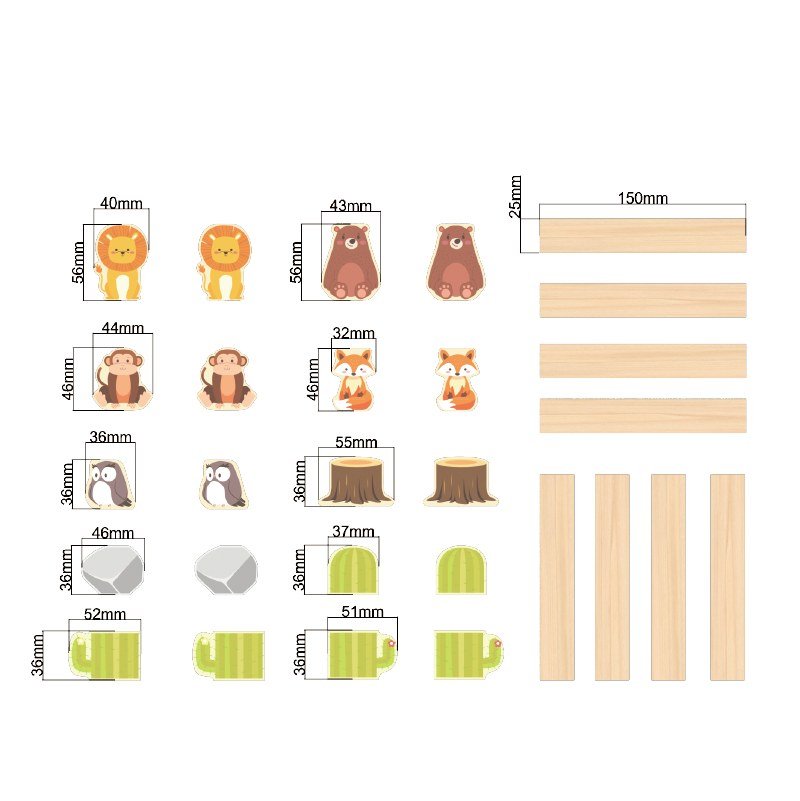
Minimums are set per style rather than per order: 1,000 pieces per style for small items such as stacking sets, and 500 pieces per style for large wooden structures. One term specifically rewards planned reorders: when a sample has been approved in writing and the bulk order for that style reaches 5,000 pieces, the base sampling fee already paid can be credited in full against the bulk payment or refunded — the exact mechanism is stated on each quotation. Repeat orders run against the frozen component sheet and the approved golden sample, and test documentation is issued against the ordered specification. Our MOQ FAQ covers the common follow-up questions, and the wooden learning and education toys range — including the penguin balance stacking set and the forest animal balance stacking blocks — shows the formats this applies to. To review a reorder against your own season, contact the KIDMERRY team with your style, quantity and target shelf date.
Frequently Asked Questions
How early should I reorder wooden stacking toys before the holiday season?
For a Q4 retail peak, a confirmed purchase order in late spring or early summer is the working benchmark: it leaves room for sample re-confirmation, 30–60 days of bulk production depending on the season, inspection, loading and ocean transit before shelves need stock. Seasonal colorways and seasonal packaging should be decided even earlier, because they add paint and print lead time to the same calendar.
Does a reorder need new samples and new test reports?
A reorder should include a re-sample of the existing style, compared against the approved golden sample and signed off — for an existing design this typically takes 7–10 working days. Test documentation follows the specification: where the reorder repeats the approved specification unchanged, existing documents are the reference; where a colorway, component set or age grading changes, ask which documents carry over and which are re-issued before confirming the order.
Can I add a seasonal colorway to an existing stacking set for the peak?
Yes, and it is a common way to refresh a staple for the gifting season — but treat it as a small development task, not a color swap. The new colorway needs its own approved paint reference on the actual wood substrate, and any seasonal packaging adds a print run with its own lead time — the same 15–20 working days a custom-drawing sample takes. Decide both before the purchase order, because bulk painting starts from approved references.
What happens if my reorder would be produced during Chinese New Year?
Chinese New Year 2027 falls on 6 February, and most factories stop accepting new production orders weeks before that date while material and packaging suppliers often stop earlier. A reorder that cannot finish production and loading before the holiday waits for the gradual restart and the queue behind it. The practical options are to accelerate the order ahead of the holiday or schedule it into the post-restart program — get the factory's last production start and last FOB loading dates in writing and choose deliberately.
Quotable Summary
A wooden stacking toy reorder fails in the calendar long before it fails in the warehouse. Work backwards from the shelf date through ocean transit, inspection and loading, bulk production and sample confirmation, and freeze the specification — golden sample, component sheet and packaging artwork — when the purchase order is signed. The factory's Q2–Q3 capacity peak and the Chinese New Year cutoff on 6 February 2027 are the two fixed walls of the winter calendar, and both reward early confirmation. A repeat order inherits fit and color only when it runs on the same fixtures, the same paint batches and the same component specifications as the approved sample. Confirm lead times, MOQ per style and document carry-over in writing with the supplier before committing a delivery date.
Lock Your Peak-Season Reorder
About Kidmerry: Yunhe Kidmerry Toys Co., Ltd is a wooden toy manufacturer based in Yunhe, Zhejiang, China. The factory runs in-house CNC machining, finishing and assembly, and holds ISO 9001:2015 certification, with FSC-certified board available on request. Sampling takes 7–10 working days for existing styles and 15–20 working days for custom drawings; bulk production runs 30–45 days after sample approval. Ask Kidmerry for a quotation, a sample set and third-party test reports before your next development cycle.
Request a Quotation