
How Can a Startup Brand Launch Its First Wooden Toy Collection?
Every toy brand starts as an idea and a spreadsheet. For one two-person startup, the idea was a Montessori-inspired wooden collection; the spreadsheet showed a small budget, no factory contacts, and a launch date fixed by a crowdfunding campaign that had already been announced. This is how the numbers were made to work, and what a first-time brand owner should take from it.
A first wooden toy collection can launch in 90 days from design lock to shipped goods — but only when the design is locked early and certification runs in parallel, which is what made the final phase pure production. Size each SKU against its expected demand rather than buying the minimum everywhere, and remember the minimum is evaluated per style: 500 pieces for large structural and all-wood products, 1,000 for small items or high-plastic designs, so an eight-SKU launch is eight commitments, not one. The timeline arithmetic is standard — 15–20 working days to sample a new design, 30–45 days of bulk after approval, 45–60 in the Q2–Q3 peak — so send the concept, budget and launch date first and confirm honestly whether the numbers work within 90 days.
- The Three Walls Every New Toy Brand Hits
- Shared Tooling: Using Proven Designs Where It Does Not Show
- Design for Manufacturability as a Free Cost Reduction
- Sizing the First Run Without Overcommitting
- The 90-Day Launch Timeline
- Certification, Packaging and Fulfilment Readiness
- Scaling the Follow-Up Order
What This Guide Covers
- The Three Walls Every New Toy Brand Hits
- Shared Tooling: Using Proven Designs Where It Does Not Show
- Design for Manufacturability as a Free Cost Reduction
- Sizing the First Run Without Overcommitting
- The 90-Day Launch Timeline
- Certification, Packaging and Fulfilment Readiness
- Scaling the Follow-Up Order
- What First-Time Brand Owners Should Take From This
The Three Walls Every New Toy Brand Hits
New brands encounter the same three obstacles, and they arrive together, which is what makes them feel insurmountable.
Minimum order quantities built for large retailers
Most factories quote minimums that assume a buyer with a warehouse and a national account. For a brand whose entire first-year budget is a crowdfunding raise, that number is not a commercial term; it is a wall. The important detail is that minimums are quoted per style, not per order, so an eight-SKU launch multiplies whatever number you are quoted.
There is a second-order effect that new founders rarely model. Freight and duty are paid on volume, not on ambition, and a wooden collection is bulky relative to its value. Eight SKUs shipped as a consolidated container is efficient; eight SKUs shipped as two partial shipments to hit a campaign date is not. Deciding early which SKUs will actually be in the first shipment — and accepting that one or two may follow — is a budget decision disguised as a logistics decision.
Sampling cost that consumes the budget before production starts
Sampling is front-loaded. Modelling, rendering, a manufacturability review and physical samples all happen before a single saleable unit exists. On a small run, those fixed costs land on very few units, and a brand can spend a third of its budget before it knows whether the product is viable.
Nobody to answer the manufacturability question
The most expensive question a new brand cannot answer is "will this actually make sense to produce". A design that looks beautiful in a render may need a bespoke fixture, a hand-finishing step, or a tolerances that no standard process will hold. Discovering this after the campaign closes is a different problem from discovering it before.
There is a fourth obstacle that is less often named because it feels like a personal failing rather than a structural one: sequence. New brands typically finalise the design, then the brand identity, then the packaging, and only then look for a factory. By that point every decision is fixed, and the ones that were expensive to make are the ones nobody wants to reopen. Bringing a manufacturing partner into the conversation while the drawing is still editable does not reduce your control over the design; it increases the number of options you still have.
For this client, all three arrived at once: a fixed public launch date, a small budget, and eight SKUs that had been designed as a collection rather than engineered as a production programme.
Shared Tooling: Using Proven Designs Where It Does Not Show
The first structural decision was to split the eight SKUs into two groups. Three of them were products where the customer-visible value was in the brand, the colour and the packaging, not in the geometry. For those, we proposed starting from proven in-house designs and tooling rather than building new tooling from scratch.
This is a specific and often misunderstood option. Shared-tooling ODM is not "selling someone else's product". The geometry, finish and decoration are adapted to the brand's requirements; what is shared is the underlying process setup and, where applicable, existing fixtures. The commercial effect is real: it removes a tooling line from the budget, shortens the engineering phase, and reduces the risk that a first sample fails on a process detail rather than a design one.
The trade-off is honest and should be stated up front: shared tooling constrains the geometry. If a specific silhouette is the entire point of your product, this route is not for you. For the three SKUs in this collection where the brand story and colourway carried the value, it was the right call and removed the largest single line from the budget.
Design for Manufacturability as a Free Cost Reduction
The second decision was to run a manufacturability review across all eight designs before any sampling, and to accept the simplifications it proposed. Two designs changed.
- A chamfered edge was replaced with a standard radius. The chamfer required a separate setup; the standard radius runs on the existing sanding and routing sequence. Visually the difference is small; in process terms it removed a whole operation.
- A through-slot was changed to a stopped slot. The through-slot weakened the section and required a fixture to hold the part during cutting. The stopped slot is stronger and holds itself.
Neither change is visible in the finished product to anyone who did not see the original drawing. Both removed cost without removing value, which is the entire purpose of the exercise. This review is where a first-time brand gets the most leverage, because the only cost is a willingness to change the drawing before it is frozen.
Sizing the First Run Without Overcommitting
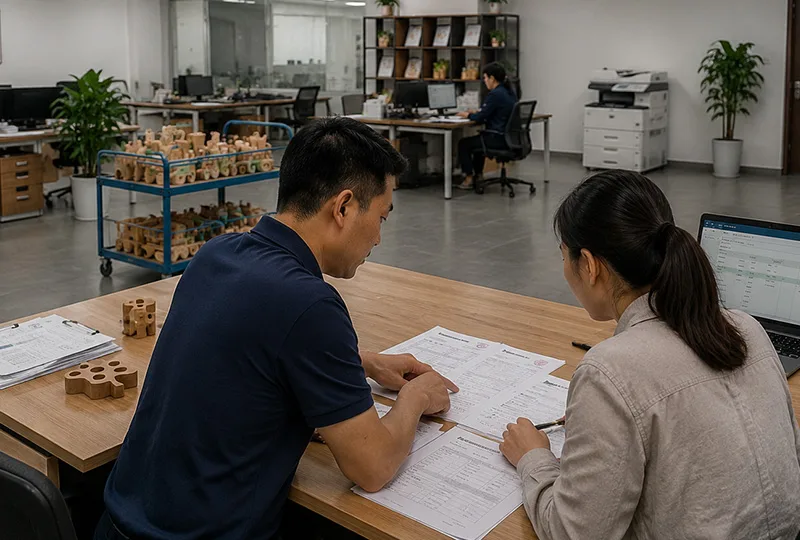
The third decision was the most commercially delicate: how many units to make first. Make too few and the unit cost is punitive and the campaign cannot be fulfilled; make too many and the entire budget is sitting in a warehouse while the brand still has no sell-through data.
Our standard minimum is 500 pieces per style for large structural items and all-wood products, and 1,000 pieces per style for small items and for designs with a high proportion of plastic components. The unit is per style, not per order, which for an eight-SKU launch is the number that matters.
For this client, the practical answer was to size each SKU against its expected campaign demand rather than to buy the minimum everywhere. Shared-tooling SKUs carried a lower effective entry point, which allowed those lines to be ordered closer to actual demand, while the fully custom designs were sized to the minimum that made the unit cost work. Where a design was genuinely uncertain, the recommendation was to make less and reorder, because a second production run at a known sell-through rate is a far better risk than a first run sized on optimism.
The 90-Day Launch Timeline
The programme ran to 90 days from design lock to shipped goods, which is achievable for a small collection when the decisions above have already been made.
| Phase | Days | Milestone |
|---|---|---|
| Design lock | 1–14 | Eight SKUs finalised, manufacturability simplifications accepted |
| Sampling | 15–35 | CNC samples approved, colour standards locked |
| Certification | 36–60 | Test reports received, packaging artwork finalised |
| Production and delivery | 61–90 | First run packed and shipped |
Two features of this timeline are worth copying. First, design lock took a full two weeks and was not compressed; the time saved came later, from not reopening decisions. Second, certification ran concurrently with the final packaging artwork rather than after it, which is what allowed the fourth phase to be pure production.
Standard sampling for a new design is 15 to 20 working days, and mass production runs 30 to 45 days after sample approval, extending to 45 to 60 days during the Q2 to Q3 peak. A ninety-day programme works because these two blocks are sequential but everything else overlaps them.
Certification, Packaging and Fulfilment Readiness
For a crowdfunding launch, compliance has a deadline that cannot move: backers must receive a compliant product, and the campaign platform and the destination market both hold you to it.
Testing against the production formula
Testing was commissioned against the exact coating and colour set used in production. This sounds obvious and is frequently skipped: a brand tests a "representative" sample, then changes a colour, and discovers too late that the report no longer describes the product. There is no universal validity period for a test report: if the product remains unchanged the report can generally still be used, but if materials, coatings or the applicable standard change, further testing may be required.
Age grading and labelling
Age grading drives which safety requirements apply, and it has to be decided before artwork is printed because it appears on the box. For a US-facing launch, the CPSC's age determination guidance relating children's ages to toy characteristics and play behaviour is the reference most buyers use to justify a stated age range. Deciding this at artwork stage rather than after printing avoids the most avoidable of all rework.
White-label packaging support
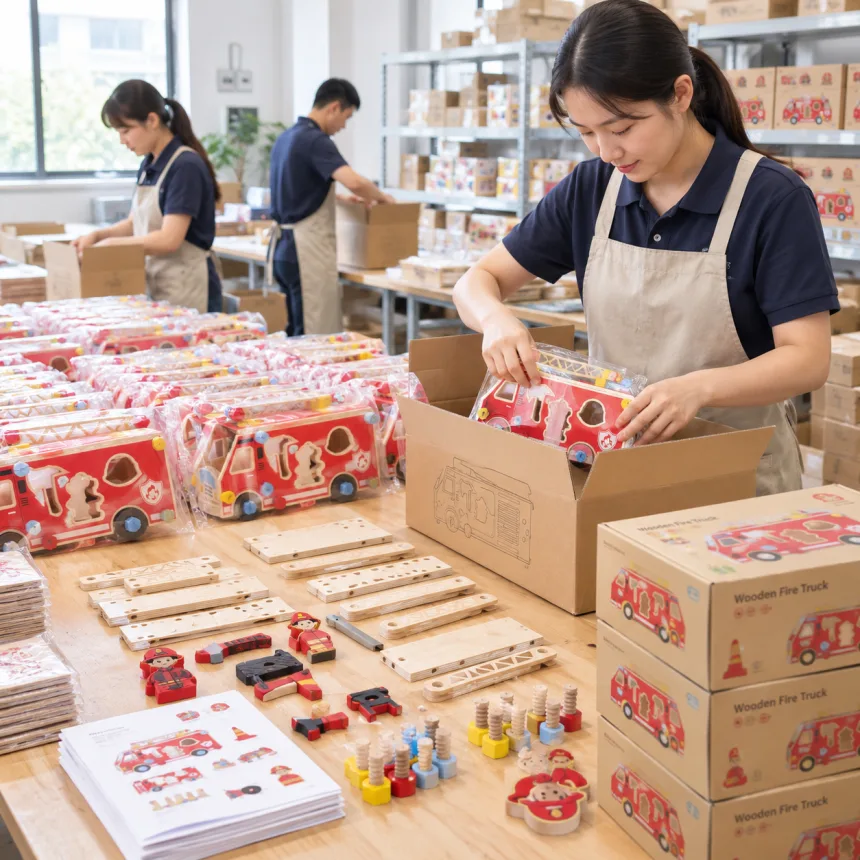
The team had brand capability and no structural packaging capability. We supplied artwork-ready carton templates so they could focus on brand expression rather than on board grade, insert geometry and print specification. For a two-person team, this is usually the highest-value non-product thing a manufacturing partner can provide.
The same templates also settle a question that first-time brand owners usually discover too late: carton quantity drives freight cost per unit far more than product design does. Once the board grade and insert geometry were fixed, the client could calculate landed cost per backer reward accurately enough to set campaign pricing with confidence, rather than discovering the number after the campaign closed.
Scaling the Follow-Up Order
The first run shipped and the campaign was fulfilled on time, with backers receiving products before the promised date. The commercially interesting part came afterwards.
Once sell-through data existed, the follow-up order was placed at roughly three times the first run. That second order was materially easier than the first: the specification was frozen, the coating was validated, the carton was proven, and the process was understood on both sides. Unit cost improved because the fixed sampling and testing costs were no longer amortised over a small run, and because the process had been through a cycle.
The general lesson for new brands is that the first order is expensive because it buys information, not because manufacturing is expensive. Plan the first run to be small enough to survive being wrong, and plan the second run to benefit from everything the first one taught you.
Two specific improvements are worth planning for in advance. First, colour standardisation: once a brand's palette has been through one production cycle, the standards can be retained and reused, which removes a whole approval loop from the second order. Second, carton rationalisation: the first run often uses a different carton per SKU because print plates are being proven; the second can consolidate to a common carton with a printed label or sleeve, which simplifies pack-out and reduces board cost. Both are small changes that compound across a growing catalogue.
Launching a wooden toy brand? Send us your concept, budget and launch date, and we will tell you honestly whether the numbers work within 90 days — and what we would change to make them work.
Talk to Us About Your Launch Private Label Customisation
What First-Time Brand Owners Should Take From This
Three things made this programme work, and none of them required a bigger budget.
Fewer custom parts. Every bespoke geometry is a cost, a risk and a calendar item. Where the brand value sits in colour, story and packaging, share the geometry and spend the money where customers can see it.
Proven tooling where it does not show. Three of the eight SKUs started from existing designs and fixtures. The collection still looked cohesive because the brand layer — colour, engraving, packaging, photography — was entirely the client's own.
One honest manufacturability review before sampling. Two small design changes removed two process operations. That is the entire return: a day of engineering at the start instead of weeks of correction later.
One more thing is worth saying plainly. A manufacturing partner cannot fix a launch date that was set before anyone knew what the product would cost to make, and no amount of process discipline recovers a campaign timeline that has already been published. The brands that launch comfortably are the ones that asked a factory two questions before they announced anything: what would you change about this design, and what would it cost at the quantity I can actually afford.
If you are at the stage of turning a spreadsheet into a product, the private label customisation page explains how first collections are typically structured, and the wooden toy purchasing guide sets out the commercial terms. To talk through your own numbers, get in touch.
What is the minimum order for a first wooden toy collection?
Can a startup really launch in 90 days?
What is shared-tooling ODM?
The tooling savings feed the 90-day timeline directly: sampling runs 15–20 working days and bulk 30–45 days after approval when no new tooling has to be cut.
How should I size my first production run?
The floor to size against: 500 pieces per style for large structural and all-wood products, 1,000 for small items or high-plastic designs — and an eight-SKU launch is evaluated SKU by SKU.
When should safety testing be commissioned?
Commissioned at material lock, testing runs inside the 15–20 working days of sampling instead of adding weeks on top of the 30–45 days of bulk production.
Does a manufacturing partner help with packaging?
Templates cover board grade, insert geometry and print specification, and carton data is confirmed before the 30–45 days of bulk production begin.
Launch Your First Wooden Toy Collection with KIDMERRY
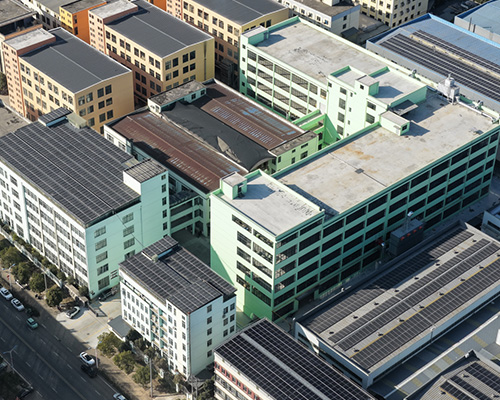
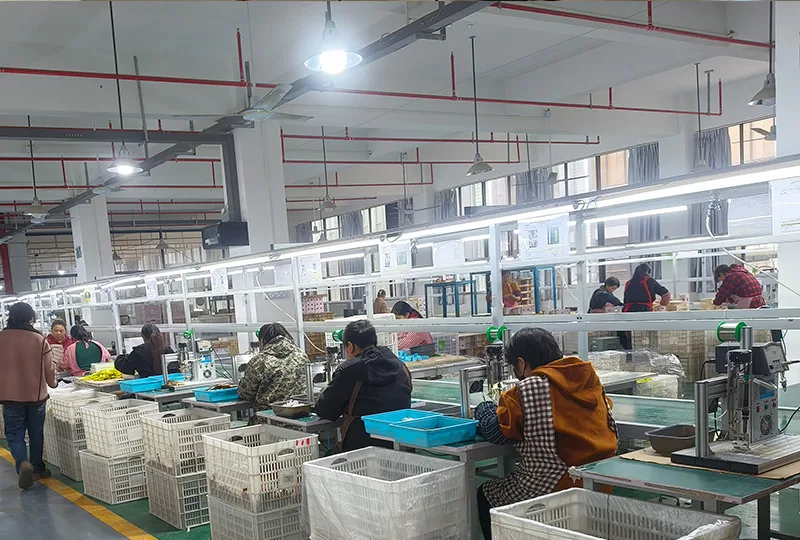
About Kidmerry: Yunhe Kidmerry Toys Co., Ltd is a wooden toy manufacturer based in Yunhe, Zhejiang, China. The factory runs in-house CNC machining, finishing and assembly, and holds ISO 9001:2015 certification, with FSC-certified board available on request. Sampling takes 7–10 working days for existing styles and 15–20 working days for custom drawings; bulk production runs 30–45 days after sample approval. Ask Kidmerry for a quotation, a sample set and third-party test reports before your next development cycle.
Request a Quotation