The Power of Pretend Play: How Role Play Toys Develop Social & Emotional Skills
The Power of Pretend Play: How Role Play Toys Develop Social & Emotional Skills
When a child steps into the role of a chef, a doctor, or a shopkeeper, they are doing far more than entertaining themselves. They are conducting a cognitive rehearsal of real-world social interactions. Pretend play — also called dramatic or imaginative play — is recognized by developmental psychologists as the most effective natural classroom for social and emotional learning.
Wooden role-play toys amplify these benefits. Their durability, realistic proportions, and warm tactile presence create immersive play environments where children feel safe to experiment with emotions, practice language, and test social boundaries.
For toy brands and distributors, understanding the developmental impact of pretend play transforms product selection from a simple inventory decision into a value-driven educational strategy.
Social Skill Rehearsal in Imaginary Scenarios
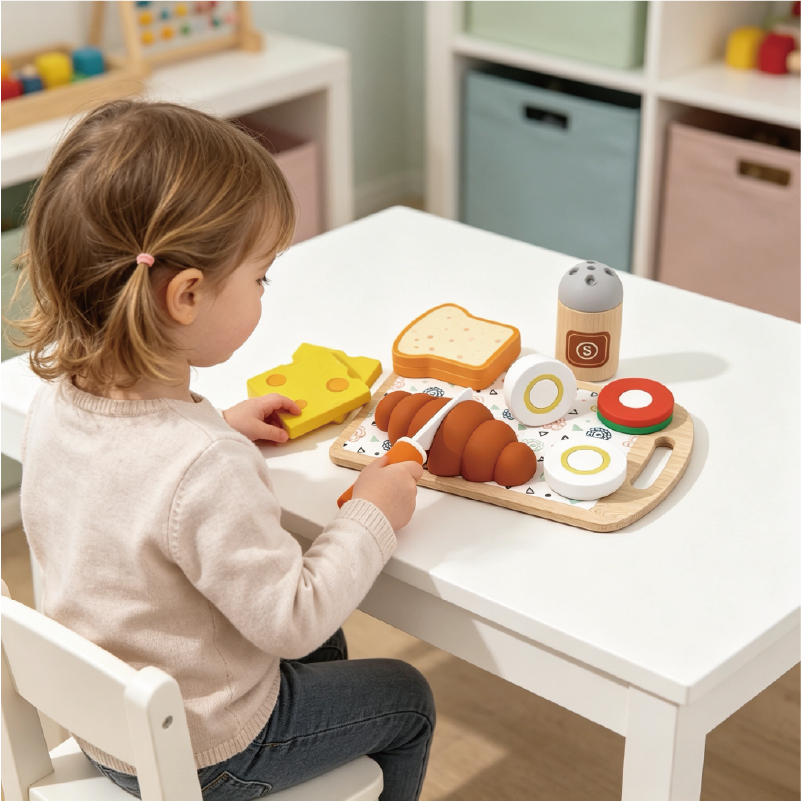
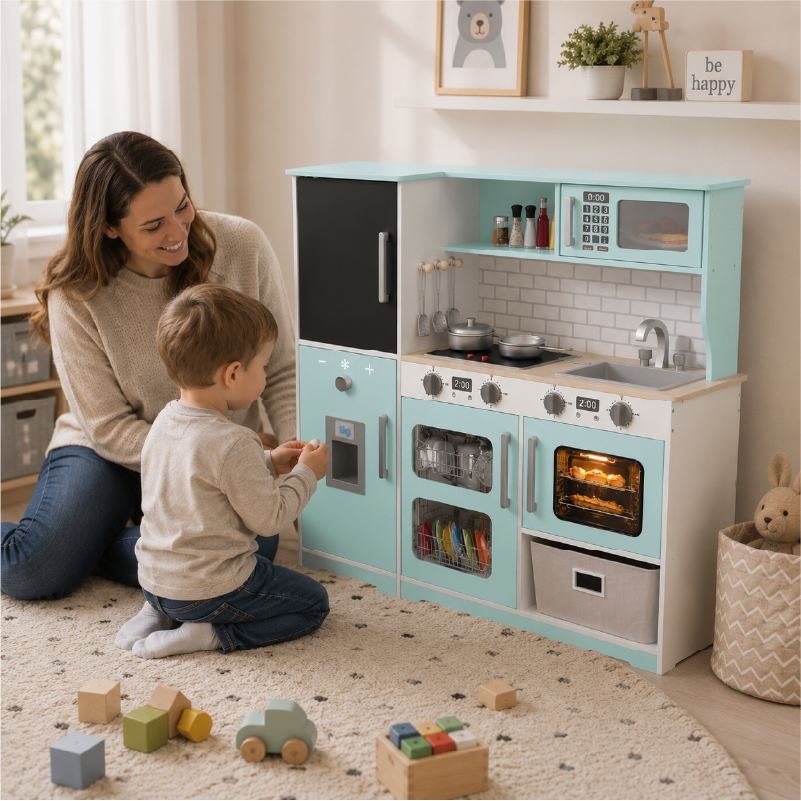
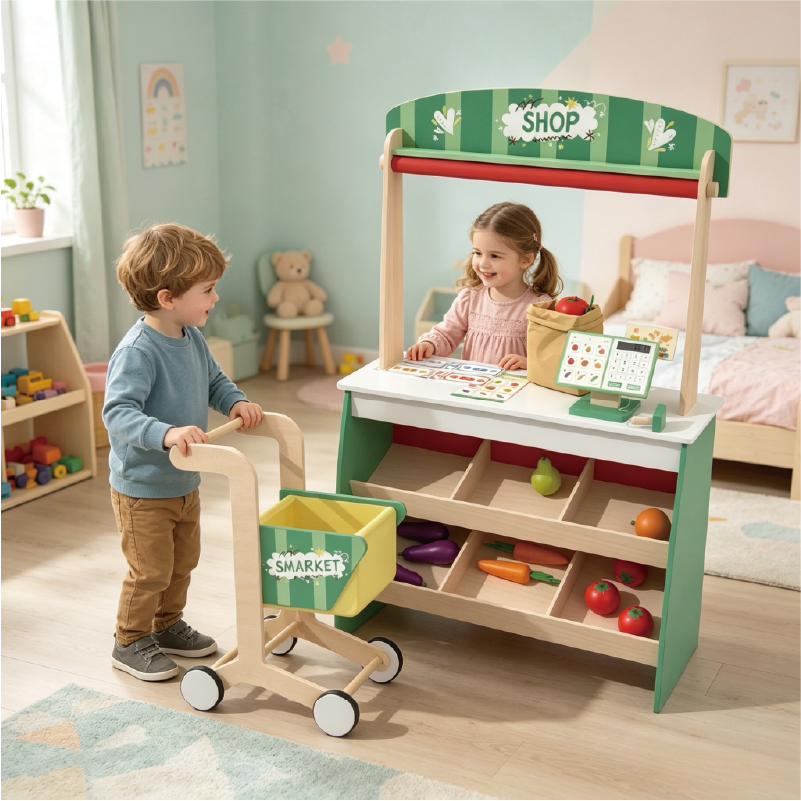
Wooden play kitchens, tool benches, and market stalls create scenarios that require turn-taking, negotiation, and cooperative problem-solving. When two children decide who will be the cashier and who will be the customer, they are practicing conflict resolution, role assignment, and shared goal-setting — competencies that predict later academic and workplace success.
Emotional Regulation Through Storytelling
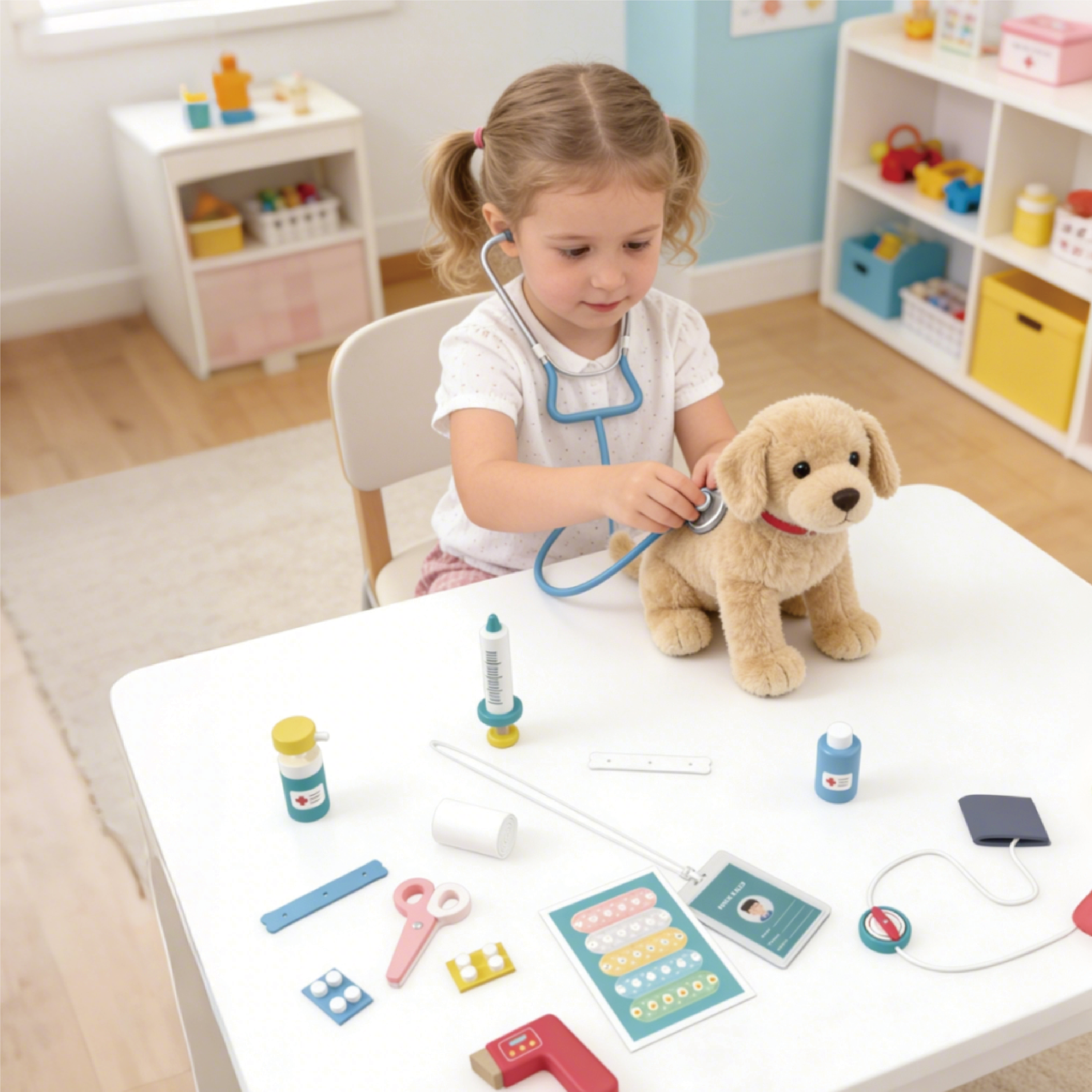
Role-play toys give children props to act out stories, including difficult emotions. A child might comfort a "sick" doll or "fix" a broken toy, processing fears and frustrations in a safe symbolic context. Wooden toys, with their natural aesthetic and absence of overwhelming electronic stimuli, help children maintain calm focus during these emotional rehearsals.
Language Development and Vocabulary Expansion
Every pretend-play scenario introduces domain-specific vocabulary. A child playing with a wooden kitchen learns words like "whisk," "simmer," and "recipe." A doctor's kit teaches "stethoscope," "thermometer," and "symptom." Research shows that children who engage in frequent dramatic play enter kindergarten with significantly larger expressive vocabularies. For manufacturers, designing role-play sets with culturally relevant accessories enhances regional market appeal.
Looking for custom wooden toys for your brand?
Contact KidMerry for OEM/ODM solutions, fast sampling, and certified manufacturing. Get a Quote