Montessori Wooden Toys and STEM: A Buyer's Guide to Specification, Sourcing and Compliance
Montessori and STEM are no longer two separate shelves in a buyer’s catalogue. They are two descriptions of the same purchase: a wooden object that a child manipulates repeatedly, that rewards precision, and that survives a school year. This guide is written for sourcing, product and category managers who need to turn that idea into a specification, a sample plan and a purchase order — not for parents choosing a gift.
What this guide covers
- Why Montessori and STEM now share one buying brief
- What Montessori design actually asks of a manufacturer
- Where STEM learning happens inside a wooden toy
- Wood species and water-based finishes: what to specify
- Structure, tolerances, colour and graphic decisions
- Age grading, play patterns and packaging claims
- MOQ, sampling, QC, certification and export coordination
- Frequently asked questions
Why Montessori and STEM now share one buying brief
Ten years ago a Montessori order and a STEM order looked different. The Montessori buyer asked for natural wood, restrained colour and self-correcting tasks. The STEM buyer asked for kits, instructions and measurable outcomes. Today those two requests arrive in the same email, because the retail and school-channel positioning has merged: open-ended wooden materials are marketed as the earliest and most durable form of STEM exposure.
For a buyer, the practical consequence is that the specification has to serve both claims at once. A set can only be sold as Montessori-aligned if the material is honest, the task is self-contained and the colour does not do the teaching for the child. It can only be sold as STEM-aligned if the geometry, fit and repeatability are accurate enough that a pattern, a sequence or a structure actually works every time. Both requirements land on the same manufacturing decisions: wood species, machining tolerance, finish system and inspection.
That is why the first question to ask a supplier is not “do you make Montessori toys?” but “which dimensions do you hold to tolerance, and how do you verify them?” A custom wooden toy manufacturer that can answer the second question can build either line; one that cannot will produce samples that photograph well and fail in a classroom.
What Montessori design actually asks of a manufacturer
Montessori is a method, not a certification, and no single body owns the label. That matters commercially: you cannot ask a factory for “Montessori certified” and expect a document. What you can do is translate the method’s observable principles into measurable requirements, then hold the factory to them.
Honest material and restrained colour
Montessori materials traditionally use natural wood so that the child reads the object’s real weight, grain and temperature rather than a printed surface. In production terms this means a clear or low-pigment water-based finish, visible grain, and colour used only where it carries meaning — for example, to distinguish a length in a number rod or a colour in a sorting task. Buyers should state this explicitly, because the default in mass production is the opposite: full coverage paint, which hides substrate defects, speeds up line balancing and reduces grading cost. If you want visible grain, you must also accept a higher board-grading cost and write the acceptable defect limits into the specification.
Self-correcting tasks
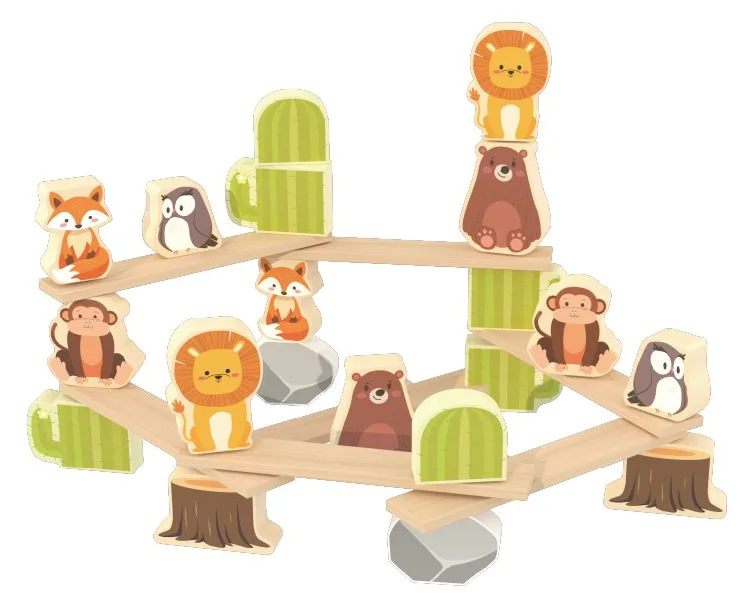
A self-correcting material tells the child whether the task was completed without an adult intervening. Mechanically, that means the fit itself is the feedback: a cylinder that only seats in its own socket, a puzzle piece that only closes when the orientation is right, a balance plank that tips when the load is wrong. This is a tolerance requirement. If the socket is cut generously to speed up machining, the material stops being self-correcting and becomes decorative. When you review samples, test this deliberately: seat every piece in every wrong position and check that it visibly refuses.
Isolated difficulty and clean repetition
Montessori presents one variable at a time. In a product range, that translates to consistent modules: the same knob diameter across a series, the same unit cube across a counting set, the same tray footprint across sorting tasks. Consistency is what makes a range expandable — and it is what makes tooling worth paying for. Ask whether the factory can hold a single reference dimension across an entire series and across reorders. That is a harder question than it sounds, because it depends on fixture discipline, not on machine capability.
Where STEM learning happens inside a wooden toy
STEM claims are easier to make than to support. The difference between a wooden object that merely looks educational and one that behaves educationally is mechanical, and it can be specified.
Spatial reasoning
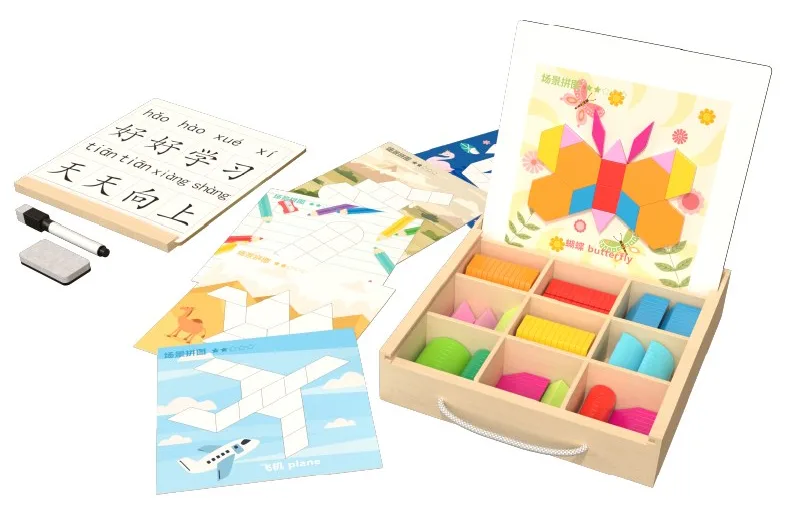
Blocks, tangram sets and stacking systems train spatial visualisation when the parts are dimensionally consistent. A tangram whose seven pieces are cut from a template with 0.3 mm drift will still form a square; one cut with 1.5 mm drift forms a shape that never quite closes, and the child concludes that they are bad at geometry. Buyers should ask for the template tolerance and for a sample that has been through a full production cycle, not a hand-finished prototype.
Cause, effect and iteration
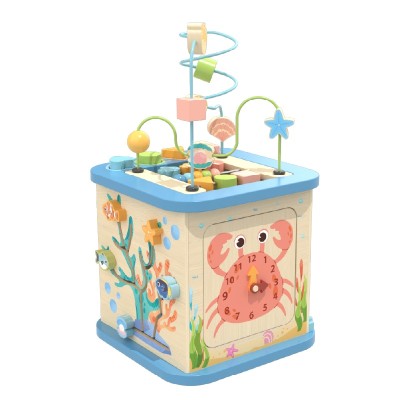
Bead mazes, marble runs and balance toys teach iteration because the feedback is immediate and physical. The engineering requirements here are different from static toys: wire paths must hold their shape through repeated flexing, entry and exit points must be radiused so a bead cannot jam, and the frame must resist the racking loads children apply when they push a toy across a floor. These are fatigue and abuse issues, not aesthetics, and they should appear in your drop-test and cycle-test requirements.
Number, sequence and classification
Counting rods, sorting trays and pattern boards introduce quantity and sequence through touch. The manufacturing risk is colour consistency across batches: if the red of a five-rod is a different red in the second container, the material stops being a reliable quantity reference. Specify colour by reference standard, require a retained approval sample per colour, and ask how the factory manages pigment lot changes.
Wood species and water-based finishes: what to specify
Wood selection is where educational intent meets cost engineering. The four species that appear most often in educational wooden toys behave differently under a CNC tool, under a finish and under a classroom’s wear pattern.
| Species | Typical use | What it gives the buyer | What to watch |
|---|---|---|---|
| Beech | Blocks, rings, knobs, high-contact parts | Hard, tight grain, takes fine detail, resists denting | Heavier and usually costlier; needs disciplined moisture control before machining |
| Birch (solid and plywood) | Panels, trays, cases, large flat parts | Stable, light colour, excellent for visible-grain finishes; plywood resists warping | Ply edge needs clean sealing; face veneer grade must be specified |
| Pine | Frames, large structures, value lines | Light, low cost, warm appearance, easy to machine | Softer — dents in classroom use; knots must be graded or filled consistently |
| Maple / basswood | Detailed parts, carving, drawing boards | Maple is hard and pale; basswood is soft and ideal for fine profiles | Basswood marks easily; better for low-abrasion parts |
These are general industry characteristics rather than a guarantee about any single product. The species actually used on a given item, and the reason for choosing it, belongs on that item’s data sheet. Ask for it in writing, particularly when a range mixes species across parts, because mixed-species assemblies can behave differently under humidity change and can finish to visibly different tones under the same coating.
Water-based finishes and what to ask for
Water-based coatings are now the default expectation in most export markets for educational wooden toys, mostly because of odour, Yellowing and volatile organic compound limits rather than because of toy-safety limits alone. When you specify a finish, three things are worth stating: the coating system (water-based, and whether it is a lacquer, a stain or a wax-oil blend), the property you actually need (saliva and sweat resistance, abrasion resistance, or both), and the test you will accept as evidence. A “non-toxic” claim without a test standard behind it is not a specification.
KIDMERRY uses water-based paints and controlled finishing processes, and applies FSC-certified material where the project calls for it. FSC at our end is a chain-of-custody certificate with a defined scope, not a blanket statement about every product; if your programme needs FSC material, confirm the specific SKU against the certificate scope before you commit to printing an FSC claim on packaging. That single check prevents the most common and most expensive packaging reprint in this category.
Discuss your custom wood and finish. Tell us the species, the finish system and the market, and we will come back with a construction proposal, a finish schedule and the test evidence we can supply for that configuration.
Discuss Your Custom Wood / FinishStructure, tolerances, colour and graphic decisions
Structure and fit
Educational wooden toys fail structurally at joints, not in the middle of a part. Dowel and tenon joints, finger joints and through-dadoes all behave differently under the racking and twisting loads children apply. Ask two questions: what joint is used at each load path, and what is the glue system and open time? A joint that is correct in geometry will still fail if the adhesive is wrong for the species or the line speed. Where a part is a safety-critical element — a stair rail on a climber, a hinge on a folding case — ask for the abuse test the factory runs and its acceptance criteria.
For machined accuracy, KIDMERRY operates a dedicated CNC cell with multi-spindle routing and automatic tool change, and works to a machining accuracy of roughly ±0.1–0.2 mm on routed parts. That figure is a machining capability, not a finished-part tolerance promise; the tolerance you can hold on a specific part depends on its geometry, the species and the finish build. Put the agreed tolerance in the drawing, not in an email.
Colour, printing and artwork on wood
Wood is not paper. It moves, it varies in tone, and it absorbs coating unevenly across grain direction. The practical rules: specify colours as physical references rather than screen values; expect a different result over stain than over clear coat; keep fine text above the size the printing method can hold; and approve on the actual substrate, in the actual coating. If your brand uses a spot colour that must match across wood, board and carton, say so up front — matching across three substrates is a separate approval loop, not an automatic outcome.
For private label programmes, packaging artwork is usually the longest lead-time item after tooling. A private label wooden toy manufacturer can run artwork, dielines and print approval in parallel with sample development, but only if the artwork is frozen early. Build that dependency into your launch calendar.
Age grading, play patterns and packaging claims
Age grading drives almost every downstream requirement: small-part limits, warning text, drop-test height, choke-risk assessment and the play pattern you can legitimately claim. It should be fixed before design freeze, not after. In practice, buyers get this wrong by grading optimistically to widen the apparent market, then discovering that the stricter market’s requirements trace back into part size and packaging text.
Packaging is where a good product gets damaged and where a compliant product gets rejected. The elements worth specifying: carton grade and flute, internal separation of heavy or finished parts, drop-test and vibration evidence for the actual packed configuration, and print-safe areas for barcode and regulatory marks. Print minimums on packaging frequently exceed the product MOQ, so a small first order can carry a disproportionate packaging cost — ask for both numbers separately before you set the order quantity.
MOQ, sampling, QC, certification and export coordination
MOQ and how it is actually set
Minimum order quantity in wooden toys is driven by changeover time, board yield and component sourcing, not by a round number in a price list. At KIDMERRY the structure is: 500 pieces per style for large structural products such as doll houses, play kitchens and outdoor climbing frames, and for all-wood designs; 1,000 pieces per style where the plastic component share is high, and for small-item designs. Final MOQ is confirmed per project. Note the unit: per style, not per order — a five-style programme multiplies the requirement five times, and that misunderstanding routinely halves or doubles a launch plan.
Sampling and development
Sampling is two different processes that buyers often compress into one. For an existing style, a sample takes about 7–10 working days. For a new item built from your drawings, allow 15–20 working days, because tool paths, fixtures and first-article inspection have to be created. Both figures are working days at the factory and exclude courier time. The most common schedule error is approving a hand-finished prototype and expecting production to match it; insist that the approval sample comes off the production route.
Quality control and inspection
Ask for three things in writing: the incoming material checks (moisture content, board grade, coating batch), the in-process checks (dimension at first article and at interval, joint integrity, finish cure), and the outgoing inspection basis (AQL level, defect classification and what happens to a borderline lot). KIDMERRY operates under an ISO 9001:2015 quality management system and holds BSCI and Sedex (SMETA) social-compliance registrations. Certificates are issued to a legal entity and a defined scope; the test reports that matter for a specific shipment are the ones issued for that product and that order.
Certification and market access
For the EU, the toy safety framework is the Toy Safety Directive 2009/48/EC today, with a new Regulation, (EU) 2025/2509, published in the Official Journal on 12 December 2025 and entering into force on 1 January 2026, with application from 1 August 2030. In other words, current shipments are still assessed against 2009/48/EC and its harmonised standards; the new regulation’s obligations, including the digital product passport, arrive on the later date. Plan packaging and documentation against the directive now and track the transition rather than claiming compliance with rules that are not yet applicable.
For the US, ASTM F963-23 is the mandatory version under 16 CFR 1250, applicable from 20 April 2024, with certain flammability provisions excluded by 16 CFR 1250.2(b); applicability is determined by date of manufacture, not date of import. CPSIA limits that buyers should know: 100 ppm total lead in substrate, 90 ppm lead in coatings under 16 CFR 1303, and 0.1% for certain phthalates under 16 CFR 1307, plus tracking labels. One structural point that catches new importers: the Children’s Product Certificate is issued by the importer or a US domestic manufacturer, not by the overseas factory. If a supplier offers to “provide the CPC,” treat that as a misunderstanding to resolve, not as a service.
KIDMERRY’s certificate list covers EN 71-3 (migration of certain elements), CPSC / ASTM F963, ISO 9001:2015, BSCI, Sedex (SMETA) and FSC chain of custody. Testing to other parts of the standard is arranged per product and per order. If your market needs a specific part, name it in the enquiry — that is faster than discovering the gap at booking.
Bulk production, export and documentation
After sample approval, mass production runs about 30–45 days, extending to 45–60 days in the peak season of the second and third quarters. Those windows start at sample approval and exclude sea transit. On the export side, agree early who produces the commercial invoice, packing list, certificate of origin and any test-report pack, and whether solid-wood packaging needs ISPM 15 heat treatment — plywood and MDF panels are normally exempt, but crates and pallets made of solid wood are not. Payment terms we work to are T/T with a 30% deposit and balance against documents, L/C at sight, and PayPal for samples.
Frequently asked questions
Is “Montessori” a certification a factory can hold?
No. Montessori is an educational method, and there is no single certificate that authorises the word on a product. What you can do is specify the observable features — honest material, restrained colour, self-correcting fit, consistent modules — and hold the factory to measurable tolerances. Be careful with trademarked names and with any supplier that claims a Montessori licence.
Which wood species should I choose for an educational range?
Beech for high-contact parts that must resist denting, birch (solid or plywood) for panels and trays where stability and a pale, visible grain matter, pine for frames and value lines where weight and cost matter more than hardness, and maple or basswood for detailed profiles. Confirm the actual species per item on the product data sheet rather than assuming from the category.
How long does a new educational wooden toy take from drawing to shipment?
Budget 15–20 working days for a custom sample from your drawings, then 30–45 days for bulk production after approval, extending to 45–60 days in the Q2–Q3 peak. Add artwork and print approval, which often runs in parallel, and sea transit, which is separate. Existing-style samples are faster at roughly 7–10 working days.
Can I print an FSC claim on my packaging?
Only if the specific product is covered by the chain-of-custody certificate scope and your own chain-of-custody arrangements support the claim. FSC at KIDMERRY is a chain-of-custody certificate with a defined product scope, not a blanket statement about every item. Check the SKU against the scope before committing artwork to print.
What MOQ should I plan for a five-style launch?
Plan per style, not per order. Large structural pieces and all-wood designs start at 500 pieces per style; designs with a high plastic-component share and small-item designs start at 1,000 pieces per style. Final MOQ is confirmed per project, and packaging print minimums may exceed the product MOQ.
Who issues the Children’s Product Certificate for the US market?
The importer or a US domestic manufacturer. An overseas factory cannot issue it. Your factory’s role is to supply the test reports and product information the certificate relies on.
Request a wooden toy sample. Send us the age grade, the play pattern and the target market. We will propose a construction, quote MOQ and sampling time, and tell you which tests apply to that configuration.
Request a Wooden Toy SamplePlanning a Montessori or STEM wooden toy range?
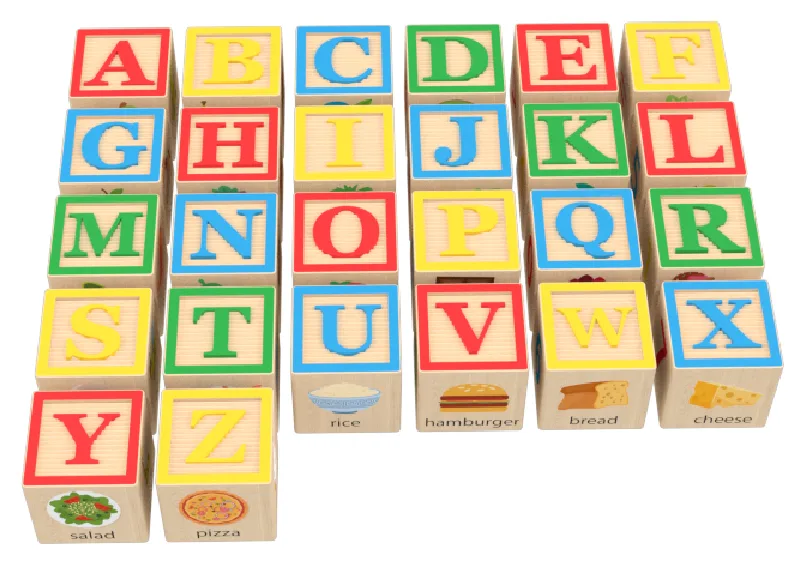
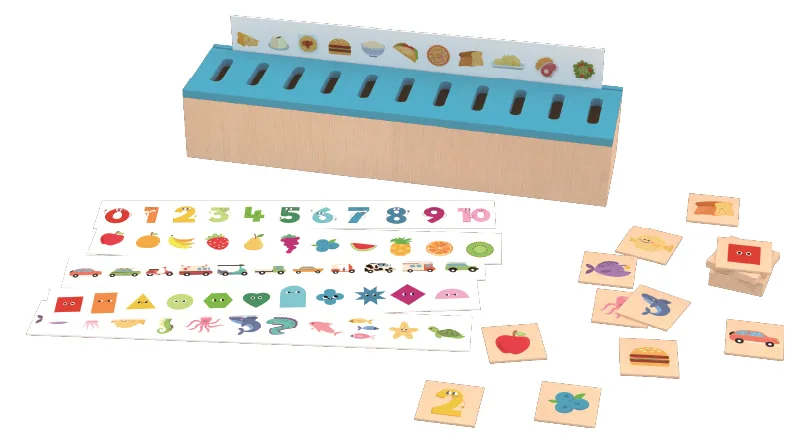
The categories in this guide — balance and stacking, geometry and tangram, sorting and classification, letter and number work — are all areas where we run OEM and ODM programmes, and where a small change in tolerance or finish changes how the product behaves in a classroom. If you are building a range, the fastest path is to send the age grade, the target market, the species or finish preference and the quantity per style. We will come back with a construction proposal, a sampling plan, MOQ and packaging options, and a production window — plus the questions we still need answered before we can quote.
For the wider commercial frame — how wood choice, certification scope and packaging interact with landed cost — our wooden toy purchasing guide sets out the same decisions step by step. And if you want to understand who you would be working with, the company background is on our about page.
Ask about MOQ, packaging and a production window
Tell us the product, the market, the age grade and the quantity per style. We will come back with MOQ, a sampling schedule, packaging options and a production slot — and the documents we can supply for that market.
Contact KIDMERRY for Wholesale Supply